
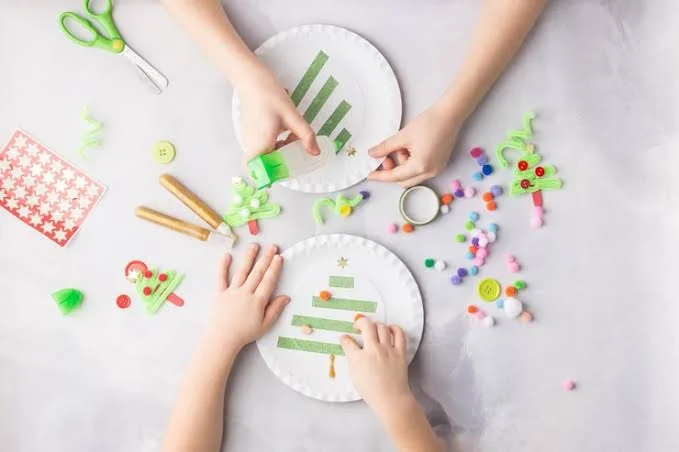
Paper plate crafts work well for preschoolers because they use cheap materials, come together fast, and give little hands something real to do. A three-year-old can paint a plate, glue on scraps, and hold up a finished dinosaur or lion with genuine pride. These projects do not need fancy supplies. Most use things you already have in a kitchen drawer or craft bin.
This guide covers three paper plate crafts for preschoolers. Each one includes the materials, clear steps, and a short note on what your child practices while making it. Safety comes first with scissors, so read those notes before you start.
A paper plate is a forgiving material. It bends without breaking. It holds paint without falling apart. If a child tears it, you can hand over another one without worrying about cost. That low stakes feeling helps children relax and try things.
Preschoolers also need projects that end. A craft that drags on for an hour loses their attention. Paper plate crafts usually finish in twenty to forty minutes, including drying time. That fits the way young children work: short bursts of focus, then play.
The projects below also build real skills. Cutting with scissors takes practice, and most children start between three and four years old. Gluing requires aim and patience. Painting lets them make choices about color and pattern. None of that happens by accident. It happens because the task matches their growing hands.
Read Also: DIY Bathroom Storage Ideas For Small Spaces
A dinosaur works because the shape is simple. Half a plate becomes the body. A few cuts turn scraps into a head, tail, and legs. The finished thing stands up and looks like something a child recognizes.
One white paper plate. Washable paint in whatever color your child picks. A cardboard tube. Scissors. A glue stick. A pen or pencil. Scraps of colored card. Stickers or googly eyes if you have them.
Draw a neck, head, and tail shape on one half of the plate. Keep the lines simple. A curved neck and a pointed tail are enough.
Cut out those shapes with scissors. Cut the other half of the plate in half again to make the body section.
Glue the head, neck, and tail onto the full half of the plate.
Cut the cardboard tube in half. Make two small slits on each half so they slide onto the body as legs.
Attach the legs. Glue triangle scraps along the dinosaur’s back for spikes.
Paint the whole dinosaur. Let your child choose the color.
Add eyes and stickers once the paint dries.
Cutting around curves and corners builds hand-eye coordination. Using two hands at once, one to hold the plate and one to cut, is a skill that carries into many other tasks. You can also talk about shapes while cutting: triangles for spikes, circles for eyes, squares for the body blocks.
A lion mask gives a child something to wear or hold. That turns craft time into pretend play, which extends the value of the project past the last glue stick.
Paper plates. Yellow washable paint and a brush. Construction paper in yellow, orange, and brown. Scissors. Glue stick. A marker. Googly eyes or a marker to draw them. A popsicle stick and tape if you want a handle.
Cut strips of construction paper in different lengths. Two, three, and four inch strips work well. If your child is just learning scissors, draw lines for them to follow. Younger children will need help with this part.
Paint the paper plate yellow. Let your child spread the paint around the whole plate. This step usually gets messy, and that is fine.
Once the paint dries, glue the paper strips around the back edge of the plate. Start with the shortest strips and layer the longer ones on top. The mane should look uneven.
Cut ears and a nose from construction paper. Glue them on. Add eyes.
Draw a mouth and whiskers with the marker.
Tape a popsicle stick to the back to make a handle if you want a mask.
Gluing strips around a curved edge takes focus and small hand movements. Painting builds arm and finger strength. The finished mask opens up pretend play, which helps children tell stories and use new words.
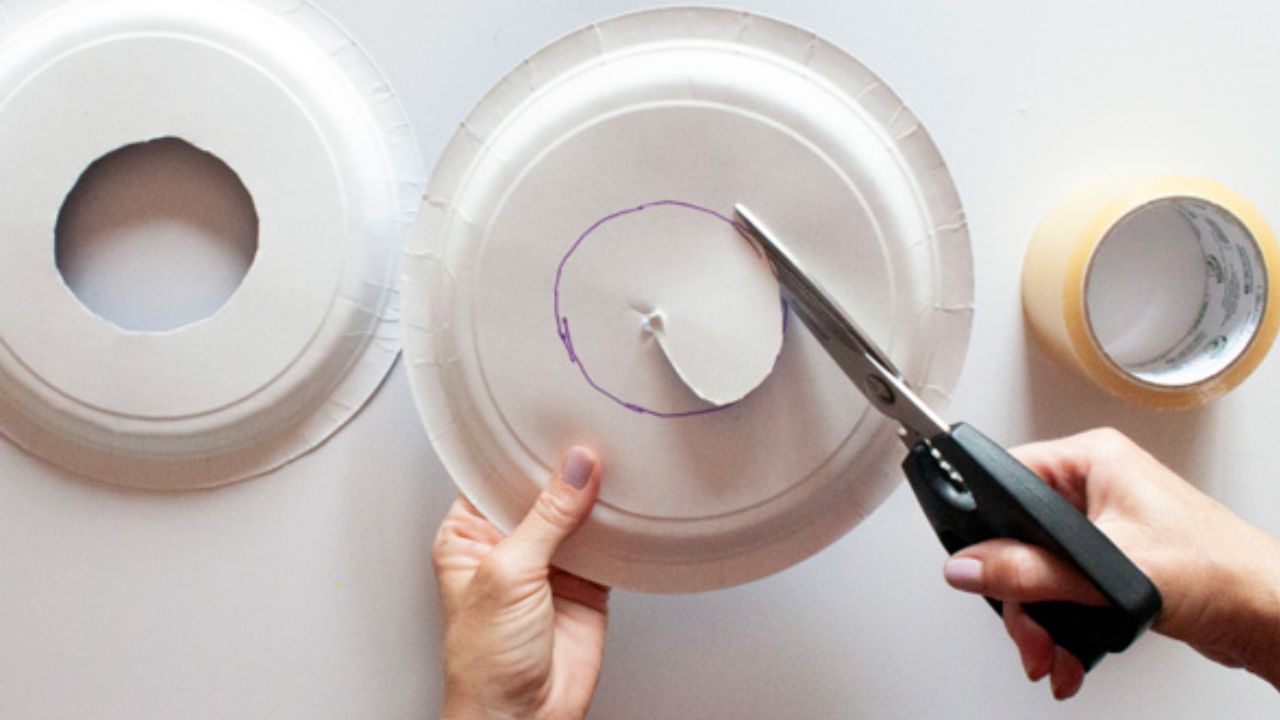
This one takes five minutes and uses almost nothing. It works well as a first craft for a child who has never painted before.
One white paper plate. Markers. Scissors.
You May Also Like: Easy DIY Home Decor Crafts For Beginners
Coloring the edges of the plate requires a child to adjust their hand position while drawing. That small adjustment builds control. Cutting the center hole is a harder scissor task than cutting a straight line, so it works best for children who have already used scissors a few times.
Scissors are the main safety concern. Children need small scissors with rounded ends. Left-handed children need left-handed scissors, or the cut will not work well and the child may get frustrated. Always supervise. Never let a child walk or run with scissors. Teach them to hand scissors to someone handle-first.
Set up the work area before you call your child over. Put down newspaper or a plastic tablecloth. Have wipes or a damp cloth nearby. Keep the materials in a small tray or basket so they do not scatter. A child who can see everything they need is more likely to stay engaged.
If paint gets on clothes, wash it out while it is still wet. Washable paint usually comes out in cold water.
You do not need every material listed. Substitutions work. If you do not have googly eyes, draw them. If you do not have construction paper, use old magazines or junk mail. The lion’s mane can be made from tissue paper, yarn, or even dried leaves.
The real value is in the doing. A child who paints a plate, cuts a shape, and glues it down is practicing skills that matter. The finished dinosaur or frisbee is a bonus. The time spent sitting, focusing, and making choices is the part that paper plate crafts for preschoolers.